目次
On Mate Selection and Matrimony (and how to avoid both)
親愛なる読者の皆さま、ごきげんよう。
この手紙が、ただお元気というだけでなく、心穏やかで朗らかな気持ちのときに届いていることを願っています。そして願わくば、人間が「恋愛」や「交際」と呼ぶ、あの複雑で悩みの尽きない儀式に心を煩わせていないことを。
というのも、伴侶選びというものは、私自身の経験から申しましても、親しい友人や親族の話を聞いておりましても、実に厄介で骨の折れるものなのです。思いもよらぬ方向へ話が転がることもありますし、ときには危険なもつれに発展することさえあります。最初から不利な条件で始まることも珍しくありません。
幸運にもその騒動そのものを避けられる者もおりますが、それには努力も知恵も、そして神々や善き妖怪たちの加護まで必要になります。もし巻き込まれてしまえば、頼れる「鎖切り役」がそばにでもいない限り、抜け出すのは絶望的でしょう……おっと、少々先走ってしまいました。
もっとも、人間の結びつきや、それを取り巻く慣習は、私たち鬼とはずいぶん違うのでしょう。「人間の求愛」という世界は、鬼にとってはいまだ謎の多い分野です。私の敬愛する叔父のような学者たちでさえ、ようやくその表面をかすめ始めた程度なのです。
Greetings dear readers, and I hope this message finds you well. In fact, I hope this finds you not only well, as in doing all right and feeling fine, but also cheerful and generally well-disposed. I also hope it finds you free from that special sort of unpleasantness and anxiety that comes from the complex dictates of the mating ritual or what I’m told mankind generally refers to as “courtship” or perhaps “dating” is the more effectual term these days. What I mean to say is, this business of mate selection, from my own experience as well as a good deal of my dearest friends and relations, is often a very thorny and very tricky thing. There’s no accounting for how awry things may go, how downright dangerous the entanglements can become, and the odds are often stacked against you right from the start. It takes a great deal of effort, cunning, and the grace of all the gods and goodly yokai to escape the whole tumultuous affair altogether – if one is so fortunate. And, if not, extricating yourself once caught can be downright hopeless without a steadfast and resolute “chain-breaker” at your side and…well, I’m getting a bit ahead of myself. I suppose, that human bonding ceremonies and the social conventions therein are quite different than our own. This millieu of “Human Courtship and Mating” is something we oni have only the vaguest impression of in general, and I fear that even our most illustrious scholars (yes, I would count my dear uncle among them) have only just scratched the surface.
人間の営みというものは、興味深い反面、外から眺めているだけではどうにも要領をつかみにくいものです。私たちも、大まかな流れくらいは理解しているつもりですが、その一つひとつに込められた意味となると、まるで霧の中です。
先日、いつものお気に入りの喫茶店―実に見事なエスプレッソと、おいしいベーグルを出してくれる店なのですが―で、偶然二人の女性が話しているのを耳にしました。おそらく、それぞれの恋人について語っていたのでしょう。
話の細部までは聞き取れませんでしたが、二人とも男性側への不満を、心から困ったという様子で語っていました。
「いつも『どこでも好きなところでいいよ』って言うの。でも結局、私が決めることになるじゃない。」
するともう一人も、
「うちも同じよ。それで『じゃああなたが決めて』って言うと、毎回同じイタリアンなの。」
どうやら食事や外出の話らしいとは分かったものの、何がそんなに問題なのかは私には理解できません。それでも妙に気になってしまいまして……ええ、少しだけ立ち聞きを続けてしまいました。もちろん純粋な学術的探究心からであって、悪意はまったくありません。
丸眼鏡をかけた、少しふくよかな女性は、深くうなずいて同意していました。
As with many fascinating but somewhat opaque human affairs, we have a rough idea of the required processes, but the exact nuance and import of their meaning is well…obscure to say the least. To give you an example of what I mean, the other day while at one of my usual haunts (a smallish cafe that not only serves particularly good espresso but also delightful bagels) I chanced to overhear a discussion between two human females regarding, what I can only assume, were their respective mates and the various travails and tribulations of their respective romances. I don’t pretend that I caught every word, but I distinctly recall them both describing, with a sense of genuine frustration, the deficiencies of their male counterparts on a number of issues. “He always says, ‘oh we can go anywhere you like,’ which really means I have to pick,” said one female, whereupon the other rejoined, “Yes, the same thing happens with us! And then when I say, ‘oh I can’t decide you choose,’ he ends up picking the same Italian place every time.” I gathered they were speaking of restaurants and “outings” in general but couldn’t rightly apprehend what the source of aggravation was, but nonetheless I was intrigued. I must confess, dear readers, I did a bit of eavesdropping. However, I assure you this was done in the name of the pursuit of knowledge and with no ill-intention. One of the females, the larger one with rather pronounced spectacles, echoed her frustration with a sympathetic nod.
そういえば、鬼と眼鏡の関係は以前にもお話ししたでしょうか。もししていなかったなら、この機会に少しだけ。
私たち鬼は基本的に眼鏡を必要としません。年を重ねても視力が衰えるどころか、むしろ物事をより遠くまで見通せるようになります。
もっとも、鬼の世界で「遠くまで見える」というのは、未来や物事の本質を見抜くという意味であって、人間の言う遠視や近視とは違います。このあたりの言葉は、どうも私は毎回混乱してしまうのですが。
それでも、人間を長く観察するうちに身につけた習慣の一つとして、眼鏡をおしゃれで掛ける鬼は少なくありません。
読書のときだけ眼鏡を掛ける変わり者の叔母などは、「文字が紙から脳へ早く届くのよ」と真顔で主張しております。
もっとも、人間にも健康によいと言い張る不思議な道具はいろいろありますから、お互い様なのかもしれません。
……おっと、何の話でしたか。そう、人間の求愛でした。
I should mention, this quirk of oni and human accessories – or perhaps I have before? Well, no matter. That is, I should mention that we oni don’t, as a rule, require spectacles nor does our vision fade or grow weak with the passage of time, quite the reverse actually as the more years one accumulates the more “far-sighted” one is said to be come. I should clarify that in our world, the term denotes, “being able to see things as they are and as they will be,” and does not imply an inability to see objects up close or vice versa, I can never remember the correct application of these terms (“near-sighted” and “far-sighted” that is). The fact being, like so many other conventions and practices we have taken up after our long observations of humans, is that many oni simply enjoy wearing them – for fashion, you know. Yes, there are even oni who insist upon wearing them for reading (one of my more eccentric aunts is one) who insist they “make the words move more quickly from the page to the brain,” and other such dubious claims. Though, I have been reliably informed, and indeed have observed myself on several occasions, that mankind also utilizes various trinkets and gadgetry with the insistence that they confer some conspicuously unmeasurable health benefit. But…what a minute, where was I? Oh yes, the complex dictates of human mating.
小柄で、少しネズミを思わせる顔立ちの女性が続けました。
「イタリアンは好きよ。二人とも好き。でも、たまには違うお店を選んでくれてもいいじゃない。」
すると眼鏡の女性が言います。
「そう、それ! それか、私が好きそうなお店を探しておいて、聞かずに連れて行ってほしいの。そういう、ちょっとしたサプライズが欲しいのよ。」
これは実に不思議な話でした。
「まあ何というか」という言い回しも、私にはいまだによく分からない人間語の一つですが、それ以上に理解できなかったのは「好きなもの」と「サプライズ」が同時に成立するという発想です。
好きだと分かっているものは、すでに知っているから好きなのであって、それを驚きとは呼べないのではないでしょうか。
もっとも、「予想していないタイミングで好きなものを受け取る」という意味ならば納得できます。
そう考えると、「うれしいサプライズ」という表現も、ようやく腑に落ちた気がしました。思えば私も、意味を深く考えずに使っていたかもしれません。
At this juncture, the other female, the smaller one with a sort of…well, how does one put it delicately? The one with a sort of “mouse-like” face continued, “I like Italian food of course, we both do, but it’d be nice if he’d pick something different once in a while.” The larger, bespectacled female replied in turn, “Right! Exactly! Or, maybe just like, you know, find something that I like, without having to ask me, and then sort of, you know, surprise me or whatever.”
Now, this was strange indeed and not only because, “or whatever,” is one of those modern phrases of mankind that I have never truly understood. It seems to mean, “I am now done speaking because I cannot think of anything else to say, but I don’t wish to remain quiet,” which may account for the fact that it’s chiefly employed by human females. Nonetheless, I thought this was a very strange request, for if someone is known to be fond of something then it can’t very well be a “surprise,” for one of the key elements of growing fond of something is having been exposed to it beforehand to determine whether or not one likes to dislikes it. And, through repeated exposure, one is able to develop a lasting fondness or “taste” for the thing in question. Hence, the two notions of “fondness” and “surprise” are seemingly incompatible. Though, perhaps by “surprise” she meant something more like “unexpected timing to receive something I quite like,” in which case that would explain that old phrase, “a pleasant surprise,” which, now that I think of it, I may have used before without realizing it’s full significance.
するともう一人も、
「そうなの! 私も同じことを言ったの。でも彼に『じゃあ何がいいか言ってくれればいいじゃない』って言われて、『だって、それじゃ……』」
ここで二人はまるで打ち合わせでもしていたかのように声を揃えました。
「サプライズにならないじゃない!」
そして二人は大笑いし始めたのです。
私もつられて少し笑ってしまいました。何がおかしいのか理解できたからではありません。ただ、その場の空気そのものが実に愉快だったのです。
もっと聞いていたら目が回りそうでしたので、そこで立ち聞きは切り上げました。私の従兄弟が最新の奇妙な発明品を熱弁し始めたときと、よく似た感覚だったのです。
とはいえ、このやり取りは人間、とりわけ女性にとってはごく普通の会話なのかもしれません。
私たち鬼の伴侶選びは、まったく別の仕組みで成り立っています。
本来なら、鬼の婚姻儀礼や歴史、結婚制度、文化的背景まで語ろうと思えば、何百巻もの書物が必要になるでしょう。それでは皆さまも退屈してしまいます。
ですから今回は、その前段階である「伴侶選び」の話から始めようと思います。こここそ、人間と鬼の違いが最もよく表れるところなのです。
At any rate, I assume that was the intended meaning as the mouse-ish one said, “Yes, I know exactly what you mean!” She then continued on, “I said the same thing, but then my boyfriend said, ‘well, why can’t you just tell me what you’d like,’ and I told him because that…” and at this point they both joined together in unison as if enchanted by some strange spell, “…that wouldn’t be a surprise!” and began laughing together quite uproariously.
I found myself chuckling a bit as well, not because I understood what the devil they were talking about, but because the general air of the whole thing was perfectly silly. At that point I ceased eavesdropping because I feared that if I listened to anymore of this conversation I would begin to grow dizzy, similar to the effect produced when my “turns up precisely when it would be most desirable for him to be elsewhere,” science-enthusiast cousin gets worked up about the latest gizmo. That said, perhaps this whole exchange would seem quite ordinary to another human, most especially another female human. You see, dear readers, we oni have decidedly different mating rituals. Unfortunately, a proper and thorough discussion of the curious and at times terrifying history of rituals, bonding practices, marital rites, as well as the cultural customs surrounding oni matrimony therein, would – if told from beginning to the present – require several hundred volumes of tedious text. This, I suspect, would provide very little enjoyment for you, my beloved readers. Therefore, after careful consideration, I think, for the time being, it would be best to first deal with this issue of “mate selection,” as it represents one of the starker differences among our peoples.
私たちは寿命が長いため、人間のように急いで結婚相手を見つけ、子孫を残さなければならないという切迫感はあまりありません。
そのため、結婚そのものは人間でいう大人になってから、ずっと後になって行われるのが普通です。
もっとも、伴侶選びの準備はもう少し早く始まります。
そこにはいくつか決まった段階があり、さらに競技のような要素まで含まれています。こうしておけば、縁談を一件ずつ細かく調整する手間が省けますし、何より何週間にもわたる宴会を堂々と開く口実になります。鬼にとって、それは極めて重要なことです。
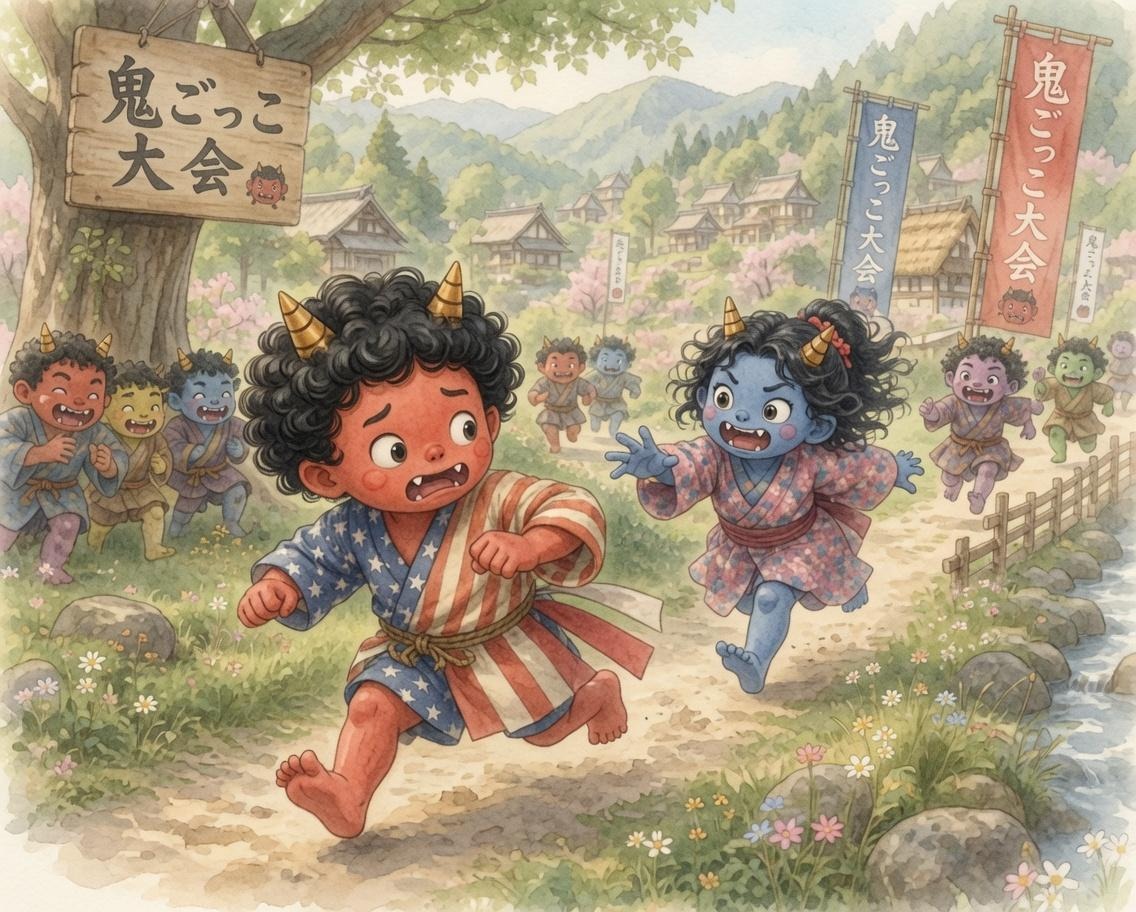
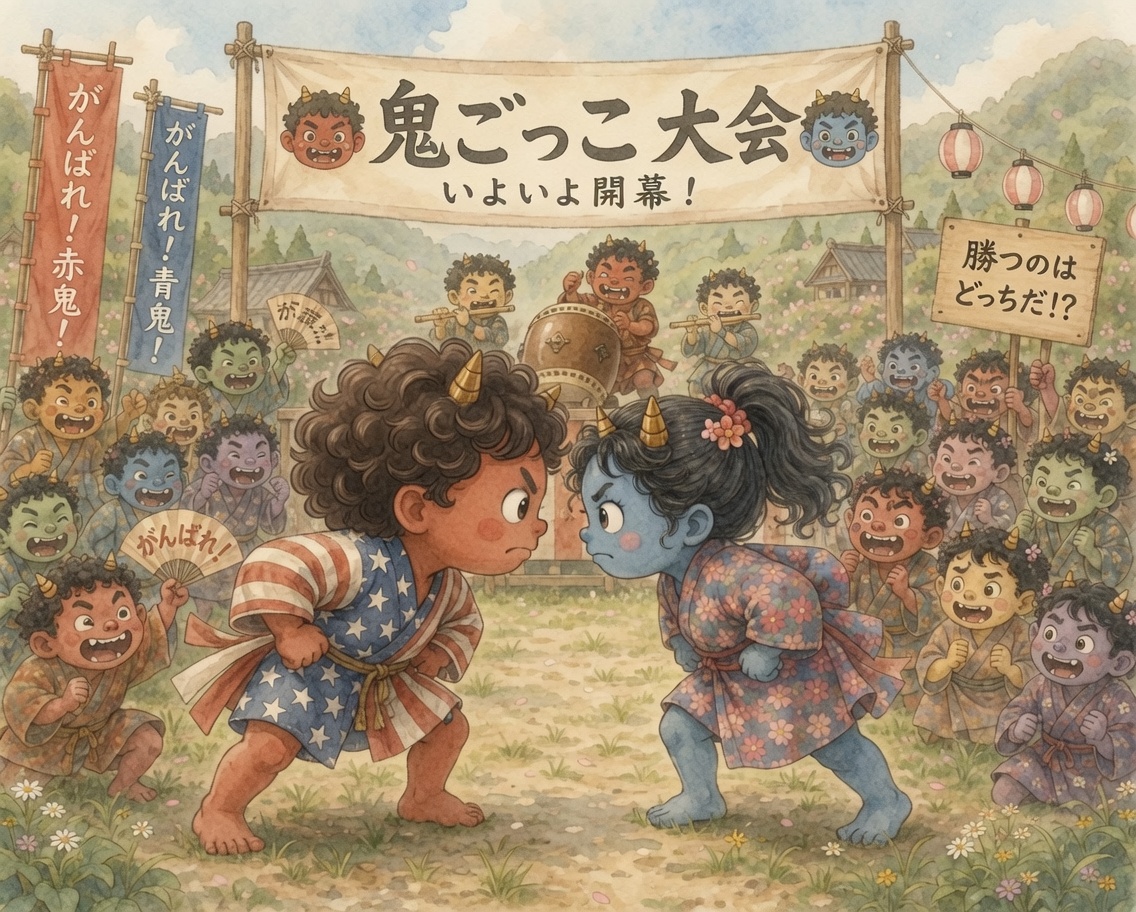
まず若い鬼の男性が「角が固まる年頃」を迎えると、その土地の年長の女鬼たちが「鬼競技会」の準備を始めます。多くは祭りや宗教儀式と合わせて開催されますが、その話はいずれまた。
開催日が決まると、若い男鬼たちは、恐ろしい叔母たちの絶え間ない催促や、親族による槍先を交えた熱心な後押しを受けながら、半ば強制的に参加登録を済ませます。
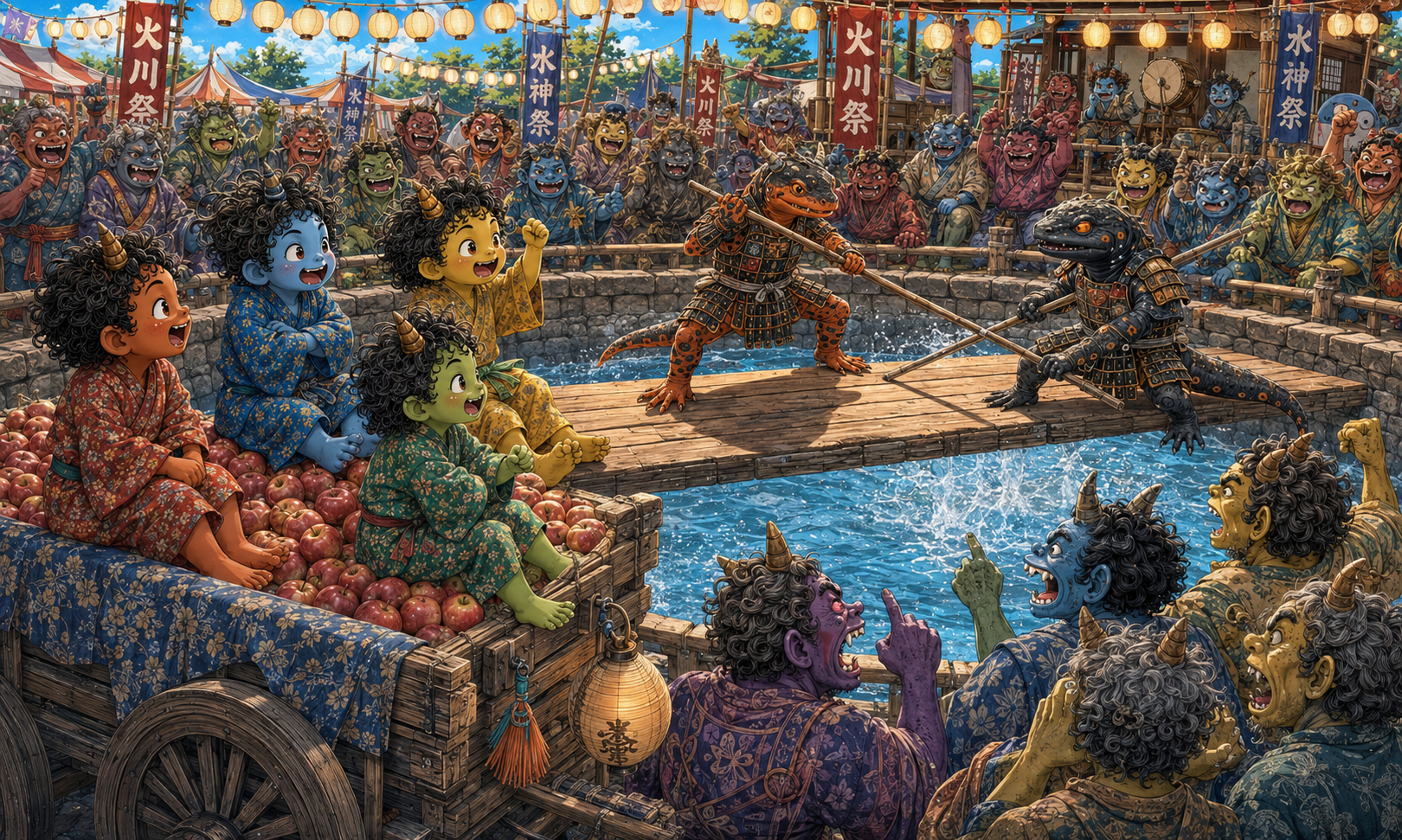
当日は晴れ着に家紋のリボンを帯へ結び、大変な祝祭ムードの中で開会式が行われます。
同じく「角が固まる年頃」を迎えた女鬼たち、そして人間でいうところの「行き遅れ」、鬼の世界では「猫飼い」と呼ばれる女性たちも集まります。不思議なことに、人間と同じく独身の年長女性には猫好きが多いようなのです。
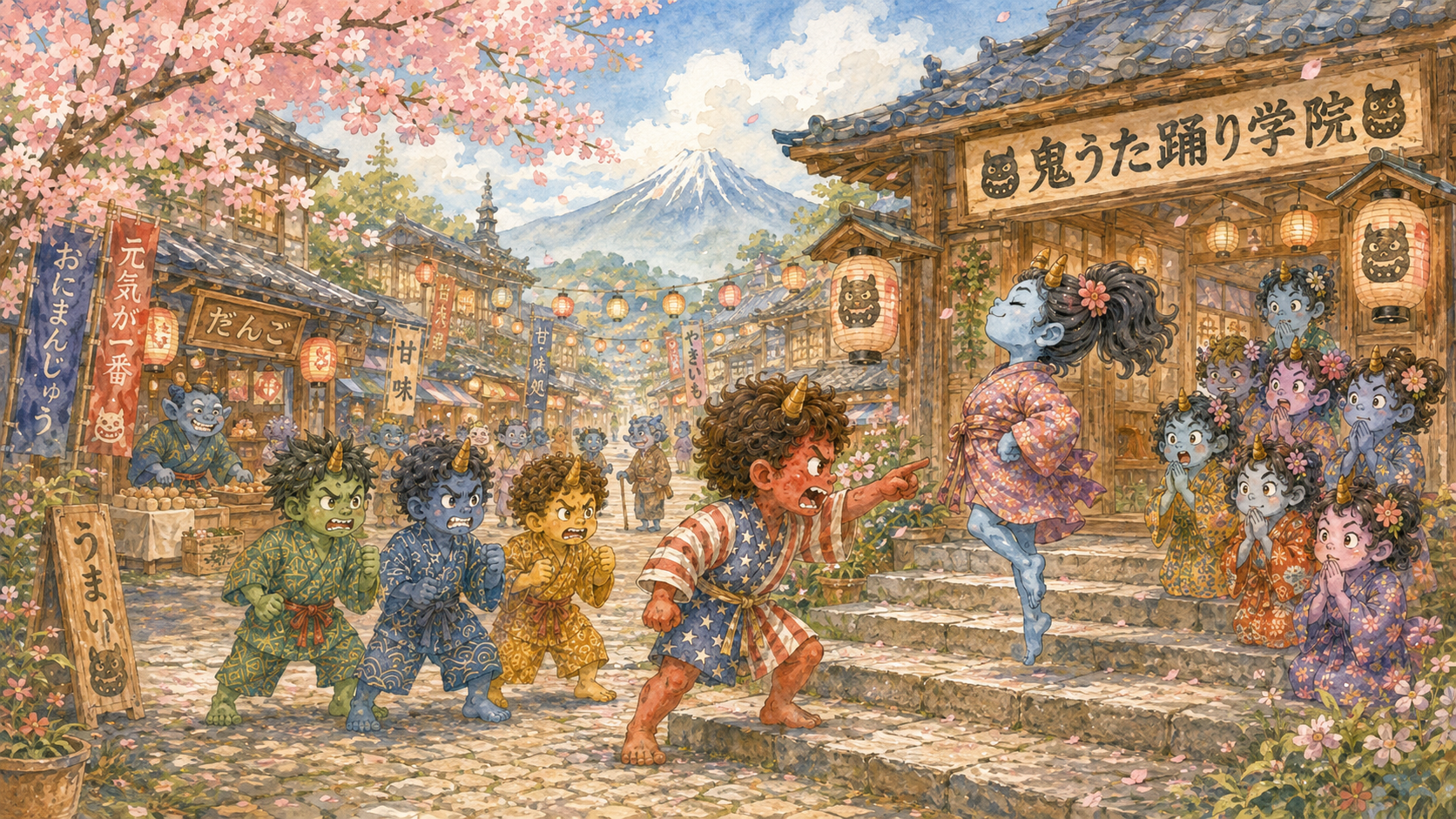
女性たちが華やかな舞を披露し、男性たちは足踏みや手拍子でそれを支えます。複雑な踊りは女性に任せるのが伝統で、このあたりはスペインにも似た習慣があったように記憶しています。
歌と踊り、そして宴は三日、長ければ一週間ほど続きます。
しかし祭りが終わり、競技の朝を迎えた瞬間から、物事は一変します。
そこから先は、決して笑い話では済まないのです。
For one, due to our long life-spans there is not such a tremendous rush to secure a betrothed and thereby continue one’s progeny, contrary to the kingdoms of mankind. This, combined with our noble and independent spirit, places matrimonial matters and other general contestations of the sexes, quite a bit later on in life, often well into what might be called “adulthood.” That being said, the beginnings of the “selection process” occurs a bit earlier and moves through several, more or less well-established stages. Further, there is a sporting element throughout these stages which is a bit more formalized and rigorous when compared to mankind. This, I believe, is mostly to avoid having to work out the minutiae of each and every proposed wedlock and, more importantly, give an excuse for several weeks of feasting and revelry, to which we oni are most fond and take most seriously. As an example of what I mean, and to begin at the beginning (which is the general practice), when oni males reach around the, “age of hard horns,” which I suppose you might call the close of adolescence in human terms, various elder she-oni of that particular province will begin to devise the “Oni Games,” often to coincide with some other festival or religious ritual, but perhaps more on that another time.
After the official commencement of the games has been established, and the dates set, the eligible young males are, “strongly encouraged,” (often by the incessant nagging of frightening aunts and the “added encouragement” of parents and other relatives – at times at spear-point) to register for the games. Festive costumes and, crucially, family ribbons are worn on a kind of belt, or sash and great pomp and ceremony accompanies the opening day. At this point, the she-oni who have also reached the, “age of hard horns,” along with what a handful of what you humans might call “old maids,” or what we oni call, “cat farmers,” (strangest thing that, similar to you humans by all accounts, many of our elder, unwedded she-oni have an incurable mania for cats).
Here, the womenfolk perform a great dance while the menfolk accompany with stomps, claps, and other simpler movements, leaving all the complicated twirling about to the fairer sex – I believe humans from Spain have a similar practice if memory serves correctly. It’s really a most jubilant celebration and the feasting that follows is not to be missed. After all this song and ceremony, which lasts at three days on average and sometimes a whole week, the dawn of the games arises and from here, dear readers, things take a decidedly more serious turn.
次回は、人間が「鬼ごっこ」と呼ぶ遊びが、実はどのような歴史から生まれたのか、その少々物騒な起源をご紹介いたしましょう。
きっと皆さまにも、お楽しみいただけるはずです。
それでは、また次回。Until next time!
In our next installment, we shall explore the consequential and ruthless origins of what mankind calls 「鬼ごっこ」which I trust will leave you, the good reader, most entertained.
Until next time!
“What a splendid land this is, and how lovely are its people! Fear not, I promise not to eat anyone!”
– Aka-Oni