目次
The BBQ Congress
読者の皆様、こんにちは。本日も、アメリカの独立記念日にまつわる愛国的な話を続けてまいります。
近頃、「米国式バーベキュー vs 日本式バーベキュー」という熱い議論や文化交流が盛んに行われているそうです。しかし、わたくしは個人的に、この「vs」という表現があまり好きではありません。
もともとのラテン語では、単に「~に向かって」という意味だったそうですが、現代では「~と対比して」というより、「レッドチームvsブルーチーム」や「猫vs犬」、さらには―失礼ながら―「コーヒーvs紅茶」といった具合に使われています。
わたくしは、世界のさまざまな食文化が、互いに競い合ったり、対立したりしているとは考えたくありません。むしろ、それぞれが互いに刺激を与え合い、補い合うところに興味があるのです。
もちろん、コーヒーも紅茶もどちらも素晴らしい飲み物です。「どちらか一方しか選べない」などという考えには、多くの方が賛成なさらないでしょう。
そんな発想は実に野蛮でございます。そのようなことを言い出す者がいるとすれば、きっと、いたずら好きで厄介な生き物の仕業に違いありません。
決して決めつけるつもりはありませんが、わたくしはタヌキを強く疑っております。
ええ、もちろん、すべてのタヌキが困った連中だと言うつもりはございません。中には実に気さくな者もおります。しかし、こういう浅はかで子どもじみた「冗談」は、いかにも彼らが好みそうではありませんか。この一件には、どうにも「タヌキらしさ」が漂っているのです。
食べ物や飲み物は、本来、争うためにあるものではありません―『アイアンシェフ』には少々申し訳ありませんが。
Hello again, gentle readers, today we continue on our patriotic theme of celebrating Independence Day in America. It has come to my attention that there has recently been a great deal of fervent discussion and cultural exchange regarding “American vs Japanese Barbecue” For myself, I personally dislike the use of the abbreviation “vs” meaning “versus.” Although this word’s Latin origin merely denotes “towards” the modern usage, rather than rendering “as opposed to” or “in contrast to,” is most regularly used in terms of competition such as “Read Team vs Blue Team,” or “Cats versus Dogs” or even – forgive me for saying so – “Coffee versus Tea,” and I don’t wish to think that our various culinary practices are “in competition” with, OR “fighting against” each other, but am rather more interested in how they might compliment and inspire each other. Now of course we all can agree that BOTH coffee and tea are wonderful and there’s no need for one to have to choose one over the other. This is most uncivilized and any suggestions to the contrary are certainly the work of mischievous and troublesome creatures. I don’t mean to stereotype, but I have a strong suspicion this is the work of Tanukis. Yes, yes, I know they aren’t all bad and some are quite friendly, but this is exactly the sort of ill-conceived and sophomoric sort of “joke” they are all too fond of playing. The whole thing has a very “Tanuki” feeling to it. All in all, food and drink should not be a source of combativeness, with apologies to Iron Chef.
とはいえ、アメリカ人は競争というものを心から愛しております。そのため、この考え方を日常会話から切り離すのは、なかなか難しいのかもしれません。
「誰と対戦するの?」という言葉は、驚くほど頻繁に耳にします。たとえ賞品がなくても、あるいは賞品がFIFAワールドカップの優勝トロフィーとは比べものにならないほどささやかなものであっても、「そこには何らかの勝負がある」という感覚が、アメリカ人の心には深く根付いているのです。
熱い勝負が始まると聞けば、多くのアメリカ人はどうにも胸が躍ってしまいます。
ところで、英語最古の文学作品とされる『ベオウルフ』には、主人公が幼なじみのライバル、ブレカと、なんと七日間も泳ぎ比べをしたという話がございます。
偉大な名声を得るため、美しい姫君を勝ち取るため、あるいは莫大な財宝を手に入れるため―そんな理由を想像なさるかもしれません。
ところが、どうやら理由は「どちらが泳ぎに優れているかを証明したかったから」だったようです。
しかもベオウルフは、自分のほうが泳ぎが上手だっただけでなく、その七日間ずっと海の怪物と戦いながら泳いでいた、と胸を張って語っています。
もしかすると、ベオウルフこそ、ジョージ・ワシントンよりもはるか昔に現れた、本当の意味で「最初のアメリカ人」だったのかもしれません。
正直なところ、わたくしは「歴史」と「伝説」を人間がどう区別しているのか、いまだによく分かりません。
わたくしとしては、十分に面白い話なら歴史と呼べばよいと思いますし、明らかに退屈で意味のない話は「伝説」や「余談」とでも名付けて、「ほかにやることがおありなら、無理に読まなくても大丈夫ですよ」と読者に知らせてあげればよいのではないでしょうか。
もっとも、ただの田舎の鬼であるわたくしには、その基準だけで人間の出来事を分類してよいものか、それとも学校の歴史の授業を必要以上にややこしくしてしまうのか、何とも判断がつきません。
Though, as Americans so love competition it can be difficult to disentangle this notion from our everyday speech. “Versus who?” is a more common phrase than you may consider healthy, but the idea of some kind of implicit contest, even if there is no particular prize or if the prize should be considerably smaller than the FIFA World Cup trophy, is an idea deep within the American mind. There’s something downright irresistible for most Americans when it comes to the prospect of a good fight. Did you know that, in the tale of Beowulf – ostensibly the oldest text in the English language – that the titular hero enters a swimming contest with his childhood rival “Breca” for SEVEN WHOLE DAYS? Perhaps you would assume this was to win great renown, or the hand of a fair maiden, or an entire mountain of treasure, but apparently it was just to prove who was the better swimmer. In recounting this tale, Beowulf contests not only that he was the superior swimmer, but that he did so while fighting sea monsters! Perhaps Beowulf was truly the first American, even before George Washington? I must confess I am always perplexed at the annals of mankind and how one goes about deciding between what counts as legend and what counts as “history.” If it’s a good enough story it should count as history, as far as I am concerned and if it’s decidedly dull and doesn’t make much difference then that can be called “legend” or “extra fluff” or something to indicate to the poor reader that if they have something better to do they needn’t bother. Then again, as a simple country Oni, I am not sure if this criteria would be sufficient to catalog human events or it might create unnecessary difficulties in school curriculums…
あれ、ちょっとお待ちください。わたくしは、何の話をしていたのでしょうか?
……ああ、そうでした。バーベキューでございます。
おそらく、この点ほど私たちが共感し合える習慣はないでしょう。やり方こそ違えど、考えていることは案外よく似ているのです。
「えっ、どういうことですか?」
実によいご質問でございます。
一例として、わたくしの日本人のいとこが、初めてアメリカのスーパーマーケットを訪れたときのことをお話ししましょう。
彼は店のあまりの広さに感心しながら店内を歩いていましたが、精肉売り場へ着いた途端、ぴたりと足を止めました。
数分ほどケースを眺めたあと、彼はすっかり困り果てた様子になっていました。
「何かお探しですか?」
肉屋の店員が声をかけます。
「ええと……『薄切り』のお肉はありますか?」
そう答えた瞬間、彼はある重大な事実に気づきました。
自分は、「薄切り」を英語で何と言うのか、一度も考えたことがなかったのです。
しばらく沈黙したあと、彼はようやく口を開きました。
「とても薄くスライスした豚肉はありますか?」
But wait a moment, where was I?
OH Yes! Barbecue!
I think, perhaps more than any other custom, this is an area wherein our hearts are united even if the exact methodology may differ slightly. “Well, how do you mean?” you might ask.
I am so very glad you asked. To give just one example I think back to a time wherein a Japanese cousin of mine made his first visit to a supermarket in America and, impressed and shocked though he was at the sheer size of the facility, had “run aground,” as it were upon reaching the butcher’s counter. After scanning the counter for several minutes, the poor fellow was utterly baffled at the cuts of meat. “Anything in particular you’re looking for sir?” asked the butcher. “Well, umm, do you have…” and it was at this very moment he realized – to his great misfortune – that he had never thought of how one might say 薄切り in English. After a pendulous pause, he said, with some effort, “Do you have a very thin-sliced pork cutlet?”
その頃のわたくしは別の売り場で、卵の「ラージ」と「エクストララージ」のどちらを買うべきか、真剣に悩んでおりました。
鶏にも体格の違いがあるのだろうか。それとも、いっそダチョウと掛け合わせれば、もっと大きな卵が生まれるのではないか―そんな取り留めのないことを考えていたところ、精肉売り場で途方に暮れるいとこの姿が目に入りました。
「ヴェリーシン……何ですって、お客様?」
肉屋の店員も、すっかり困惑しております。
いとこも、自分の言いたいことがまったく伝わっていないと気づき、見るからに居心地が悪そうです。
そこで、わたくしは間一髪で駆けつけ、文化と言葉の橋渡し役を務めることになりました。
数分ほど説明すると、肉屋はようやく事情を理解したようで、こう言いました。
「デリミートみたいな薄さまでは難しいですが、機械で切れる限界まで薄くします。それでよろしいですか?」
わたくしたちは顔を見合わせ、小さくうなずきます。
肉屋も世界共通の「OK」の合図を返し、作業が始まりました。
やがて鬼家へ戻り、いとこはしゃぶしゃぶ用に買った豚肉を包みから取り出しました。
そして、思わず声を上げます。
「えっ? 全然薄くないじゃないか! アメリカでは肉って、みんなこんなに分厚いの?」
その理由は、キッチンへ向かってすぐに分かりました。
もちろん、アメリカ人なら「十分に薄切りじゃないか」と言うでしょう。
ですが、日本の感覚では、決して極端ではないものの、しゃぶしゃぶに使うには明らかに厚めだったのです。
I had been, up until this moment, in another aisle and was having tremendous difficulty deciding between large or extra large eggs and was wondering if there were also corresponding sizes of chickens and if it might not be better to simply breed chickens with ostriches in the hopes of producing a kind of mega-sized chicken egg when I spotted my poor cousin in distress at the butcher’s counter. “Veryshin what, sir?” the very confused butcher responded. Mortified, my ill-fated cousin realized he hadn’t been understood at all, and I arrived in the nick of time to bridge the cultural and linguistic gap. After several minutes of discussion the butcher began to understand the general idea and said, “Well, we can’t cut in “deli-meat” thin, but I’ll cut it as thin as the machine will allow, sound good?” After a brief conference, we gave the butcher the universal “OK,” and waited patiently while the cut was prepared. Upon arriving back to the humble Oni homestead, my cousin unwrapped the pork, which he had planned to use for しゃぶしゃぶ and let out an audible gasp, “What? Why, this isn’t thin at all! Is all meat in America served bone-in in huge thick cuts?” Heading into the kitchen I could see the cause for his disappointment. Now, whereas an American might contest that this certainly looked like “very thinly sliced pork,” by Japanese standards it was decidedly thick, if not egregiously so.
ここで、最初の違いについてお話ししましょう。
ひと言で言えば、「肉の厚さ」です。
鶏肉でも牛肉でも豚肉でも、両国で使われる肉そのものに大きな違いがあるわけではありません。ですが、その肉がどのくらいの厚さで切られているかという点では、グリルに火を入れる前から、すでに大きな違いが現れています。
率直に申し上げますと、アメリカの肉―とりわけ裏庭でのバーベキュー用に用意されるものは、日本のものより大きく、厚切りであることがほとんどです。日本で見かけるような「とても薄い薄切り肉」は、ほぼ見当たりません。
もちろん、グリルそのものにも違いはあります。ガス派か炭火派かという話もありますし、「スモーカー」まで語り始めると、それだけで一本の記事になってしまいますので、今回は遠慮しておきましょう。
一般的なアメリカの独立記念日といえば、ホットドッグとハンバーガーが定番です。もっとも、「いや、ブラット―つまりブラートヴルストこそ欠かせない」と主張する方も少なくありません。
しかし、ステーキやチキン、ポークチョップを焼くのであれば、肉は厚く切られていることが好まれるだけではありません。それが前提なのです。
This brings me to the first point of difference which is, to state it simply: “thickness.” Even with similar meats (chicken, beef, pork) the largest distinction comes well before the grill is even lit. The plain truth is that American cuts of meat, especially those reserved for backyard grilling, are typically of the larger and thicker variety and the “very thinly sliced” variety is essentially non-existent by Japanese standards. Now, as for the grill itself, here too there may be some slight differences, whether one prefers gas or charcoal – to say nothing of “smokers” which could easily be set aside for another entry entirely, but let us leave that for another time. Typically, when not restricted to the classic American Fourth of July staple of “Hotdogs and Hamburgers” (though many would contest “burgers and brats – short for bratwurst – is the preferred arrangement), if steak, chicken, or pork-chops are to be thrown on the grill, then it is a given that thickness is not only preferred but positively necessary.
「そんなに分厚い肉、どうやって食べるのですか?」
そう思われるのも当然でしょう。
答えは実に簡単です。
ナイフとフォークでいただきます。
当たり前の話に聞こえるかもしれませんが、この「当たり前」が実はとても重要なのです。
料理の姿を決めるのは、調理法そのものよりも、何を使って食べるかという、ごく基本的な食器だったりします。
日本のバーベキューには、独特のリズムがあります。
みんなで少しずつ肉を焼き、焼き上がったら箸で網から取り、そのまま好みのたれにつけて、熱いうちにいただく。
実に見事な連携プレーでございます。
もちろん、このやり方にも大きな魅力があります。
ですが、たとえ効率のよい方法だとしても、アメリカ人からすると、「焼き上がったものを網から直接取って、そのまま熱いうちに食べる」という流れには、どこか落ち着かないものを感じます。
その理由は、おそらく人それぞれ、自分好みの味付けやトッピングにこだわりがあるからでしょう。特にハンバーガーとなれば、なおさらです。
あるいは、単純に箸という道具が悪魔じみた難しさだからなのかもしれません。手を使ったほうが、ずっと気楽なのです。
どれほど器用な日本人でも、ハンバーガー―あるいはサンドイッチ全般でしょうか―は、箸より手で食べるほうがずっと簡単だと認めてくださるのではないでしょうか。
もっとも、それは単に、わたくしのアメリカ人らしさ―あるいは鬼らしい野蛮さ―が顔を出しているだけなのかもしれません。
“Well, how are you supposed to eat it – being so thick?” you might rightly inquire. “Why, with a knife and fork of course,” and even here, though it might seem obvious, the basic utensils dictate the character of the food more than any real practical or culinary restrictions ever could. In Japan, BBQ has a defined rhythm and an “all hands on deck” sort of approach. Smaller cuts of thinly-sliced meats are quickly seared, taken directly off the grill with one’s chopsticks, dipped in a variety of sauces and then eaten while still piping hot. Surely, this does have its advantages, but there is something deeply unsettling to the American mind about yanking something hot off the grill and eating gobbling it up right away, even if this is the more “efficient” method. Perhaps it’s because – especially in the case of burgers – everyone has their own preferences for condiments, toppings, etc. Or, perhaps it’s simply that chopsticks are devilishly tricky to use wherein one’s hands are readily available. I believe even the most conscientious Japanese will concede that eating a burger (or any sandwich for that matter) is a much simpler affair than using chopsticks, though perhaps this just my American (or Oni) barbarism showing.
しかし、わたくしは本当の理由は別のところにあるのではないかと思っております。
アメリカのバーベキューには、「食事が終わる時間は決まっていない」という暗黙のルールがあるのです。
サッカー―いえ、フットボールでしょうか―では、試合がいつ終わるのかを知っているのは、審判と全能の神だけだと言われます。
それと同じように、伝統的なアメリカの裏庭バーベキュー、とりわけ独立記念日の集まりでは、グリルで焼くものがいつ終わるのかを本当に知っているのは、ホストか焼き担当だけなのです。
皆で一斉に席に着き、決まった時間に食事を始めるというより、人々は思い思いに語り合い、ときには冷えたビールを片手に過ごします。―この点については、おそらく誰も異論はないでしょう。
アメリカのバーベキューは、「ヤード」と呼ばれる、庭とも野原とも少し違う不思議な空間を舞台にした、一種のシンポジウムのようなものなのです。
古代ギリシャの人々は、わたくしたちが彼らの政治制度をどう扱ってきたかについては苦言を呈するかもしれません。しかし、このバーベキューの形式だけは、案外気に入ってくださるのではないかと密かに思っております。
However, I suspect the real reason is the following: American barbecues have an unspoken rule which can be summarized as, “there’s no fixed time when the meal ends.” Similar to “feet-ball” wherein, apparently only the referee and God Almighty knows when a soccer game ends, the host or cook of a traditional American backyard BBQ (especially on the Fourth of July) is the only one who truly determines when the grilling concludes. Rather than everyone sitting together, eating, and chatting (and usually enjoying a crisp, cold beer – in this we are in one accord) American BBQs, as they have the benefit of this strange conceptual and physical space known as “the yard” (not to be confused with a garden, field, or ground) give rise to a sort of symposium-like atmosphere. I am convinced the ancient Greeks would approve of our BBQ format, even if they were to criticize our adaptation of their modes of governance.
日が傾き、(もちろん完全に合法的な方法で手に入れた)花火が何時間にもわたって夜空を彩るなか、人々は語らい、お酒を楽しみ、庭をぶらぶら歩き、ハンバーガーを一つ、あるいは二つ頬張ります。
それが、この日のごく自然な流れなのです。
だからこそ、日本とアメリカのバーベキューを分けているのは、ソースの違いでも肉の切り方でもありません。
むしろ、「空間」―あるいは、その空間のあり方こそが、もっとも見落とされがちな違いではないでしょうか。
Talking, drinking, walking leisurely and eating a hamburger (or two) as the light grows dim and the fireworks (obtained by entirely legal means) are lit over the course of several hours is the general “course” for the day. So once again, I am convinced that rather than particularities about sauces or cuts, it seems that space (or lack thereof) is perhaps the most overlooked factor when it comes to the differences between the Japanese and American “Schools of Barbecue.”
親愛なる読者の皆様。
こうした理由から、わたくしは日米友好の新たな一歩として、「AMERICA/JAPAN BBQ WEEK」という共同の祝日を制定することを提案いたします。
六月は雨が多く、八月は暑すぎます。そう考えますと、両国とも七月に開催するのが最も賢明でしょう。
この祝祭では、それぞれの輝かしいバーベキュー文化を祝いながら、外交関係も深めることができます。
想像してみてください。
日本の要人がテキサスやカンザスシティ、カロライナのバーベキューを味わい、一方でアメリカの外交官や国家元首は、神戸牛や松阪牛、近江牛を囲むのです。
すべては、末永い友情と協力のために。
催しとしては、ホットドッグ早食い大会―この競技では日本の実力はよく知られております―や、ハンバーガー作りコンテストを開いてもよいでしょう。
さらに、両国それぞれのバーベキュー文化の歴史や伝統を紹介する講演があれば、実に充実した催しになるはずです。
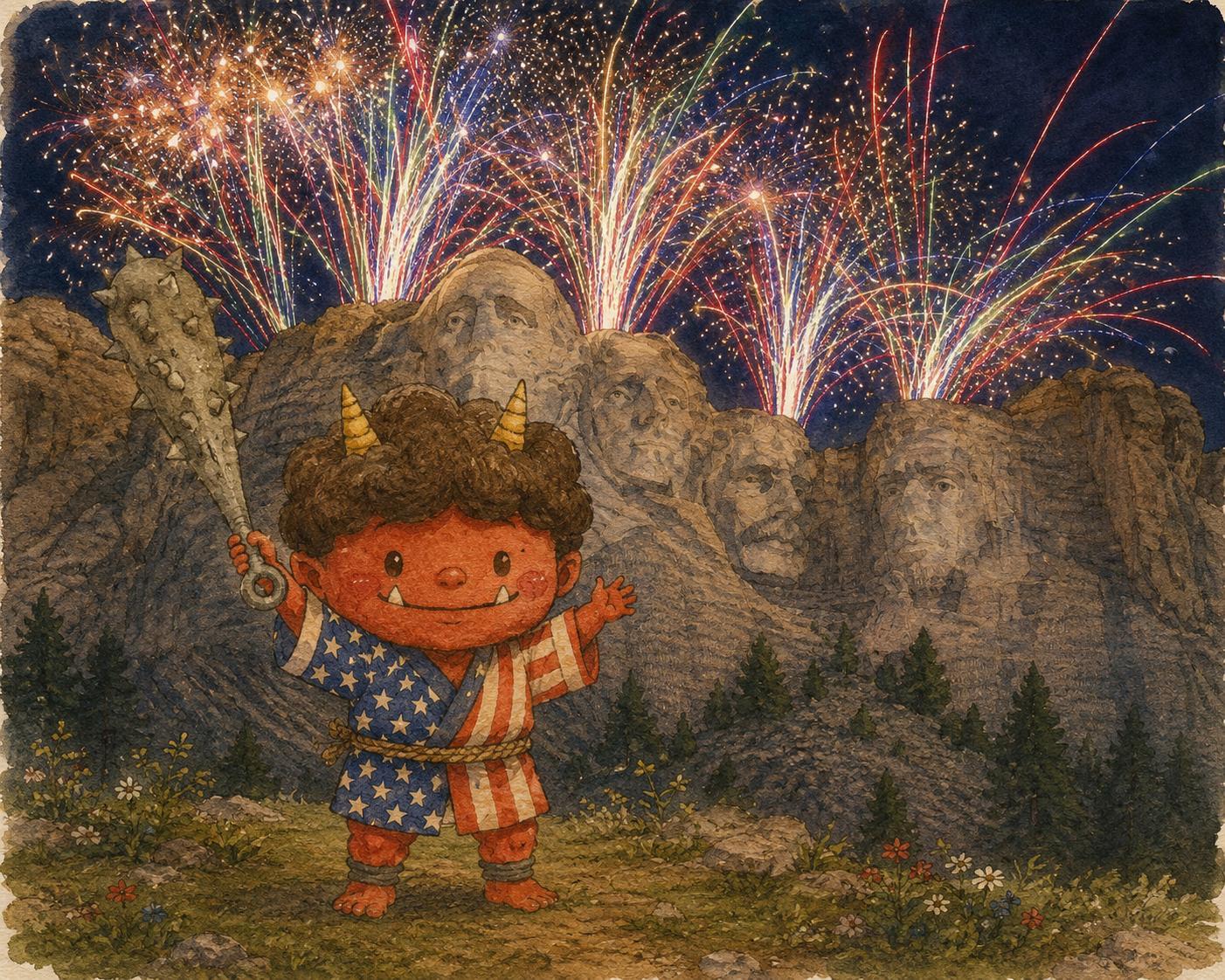
締めくくりは、もちろん盛大な花火大会。
……とはいえ、それは少々気が早いかもしれません。
まずは共通の枠組みを作ることから始めなければなりません。
ワシントンD.C.と東京の両方で「バーベキュー会議」を開き、そこから両国が肉料理の新たな時代へ踏み出すのです。
もちろん、これほど離れた二つの国で実現するには、あまりにも壮大な構想だと思われる方もいらっしゃるでしょう。
それでも、読者の皆様の多くが心のどこかで、「案外悪くない話ではないか」と感じてくださっていることを、わたくしは信じております。
それでは、読者の皆様。
また次回お会いしましょう。
どうぞ、よい独立記念日をお過ごしください。
Until next time, dear readers, Happy Fourth of July!
It is for this reason, my dear readers, that I would like to propose, for the purposes of strengthening US-Japan relations, that we establish a joint national holiday called “AMERICA/JAPAN BBQ WEEK” (I think it would be most prudent to place this in July as June is too rainy and August too hot in both our respective homelands). These days of great festivities would celebrate both glorious BBQ traditions and serve as means to deepen diplomatic relations as well. Think of the possibilities, dear readers! Japanese dignitaries could sample various types of American BBQ (Texas, Kansas City, Carolina, etc.) and American diplomats and heads of state could sample some of your finest 和牛 (Kobe, Matsuzaka, Omi) all in the name of continued friendship and cooperation. Events could include a hot-dog eating competition (for which Japanese excellence is well-established) and also a burger construction competition (a perfect opportunity to extend our mutual affection and love for grilled meat and spirited contests) along with presentations on the rich history and tradition of both styles. At the end of it all, we could hold spectacular firework displays…but perhaps here I am getting ahead of myself. First, we would need to establish a shared framework, by which I mean a sort of “BBQ Congress” would need to be held in both Washington DC and Tokyo and from here both nations could set about a revolution in meat cookery. Yes, I know, some of you may suspect that this would be beyond the scope of two nations so different and so geographically distant, but I know that many of you believe in you hearts that this the path forward and these truths we hold to be self-evident that all BBQ is to be made delicious.
Until next time, dear readers, Happy Fourth of July!
What a splendid land this is, and how lovely are its people! Fear not, I promise not to eat anyone!
—Aka-Oni